
October 25, 2026 · SureStep LLC
Uneven Sidewalk Trip Hazards in Milwaukee: Why Property Owners Should Care
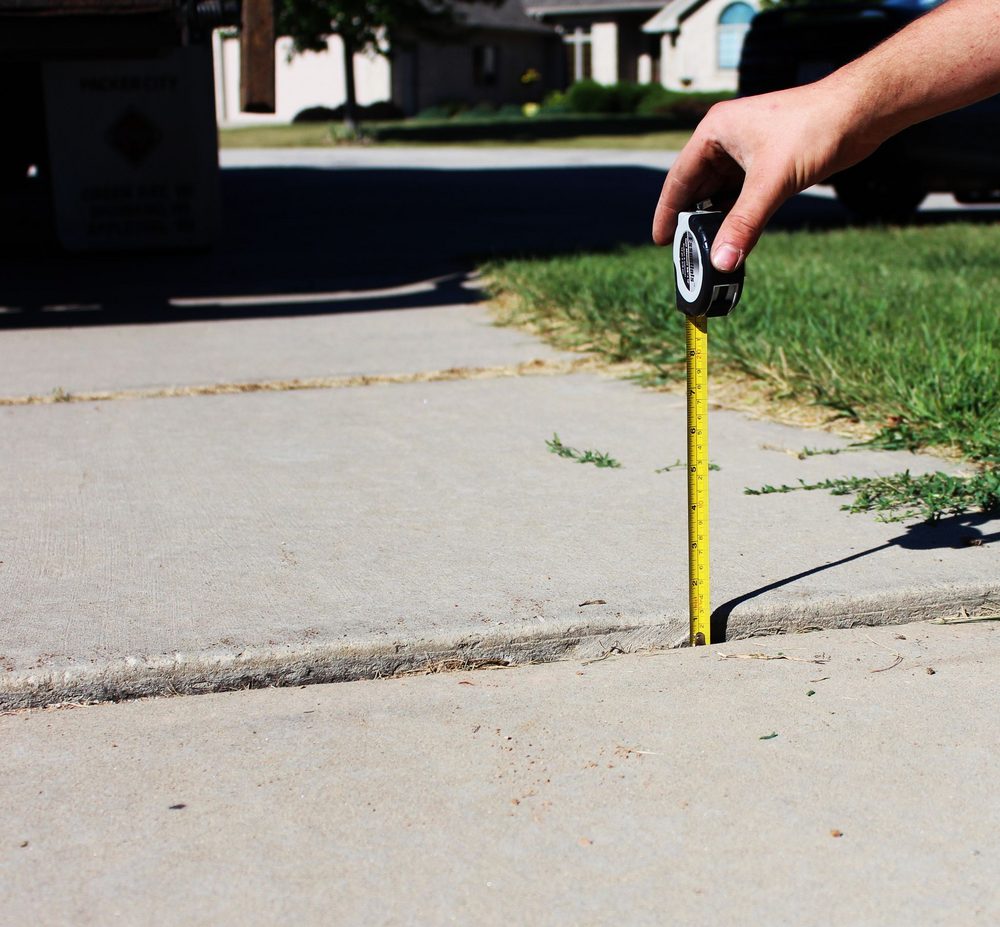
After a few Wisconsin winters, lots of sidewalks, stoops, and front walks don't sit where they were poured. One panel drops. The next stays put. That small lip is easy to ignore until someone catches a toe — a guest, a delivery driver, a neighbor cutting through after dark.
SureStep LLC lifts and levels concrete with polyurethane foam across Milwaukee and Southeast Wisconsin. We're concrete lifters, not lawyers — so nothing here is legal advice. It is a plain look at why uneven walks matter for property owners, and how foam lifting can put the walk back to grade without tearing it out.
Why uneven sidewalks are more than a cosmetic issue
A raised or dropped edge is a trip hazard. That matters for anyone who uses the walk: family, visitors, renters, customers at a storefront. It also matters because Wisconsin homeowners and landlords are expected to keep exterior walking surfaces in reasonably safe condition. When a panel settles, water keeps washing soil out from under it, and the lip usually gets worse — not better — with the next freeze-thaw cycle.
Leveling the existing slab early is almost always cheaper than waiting until someone gets hurt, the concrete breaks further, or you're looking at full replacement.
Wisconsin sidewalks: no "magic number" of inches
Homeowners often ask, "How many inches of difference before it's a real hazard?" There isn't a simple magic number that makes every sidewalk automatically "safe" or "unsafe." Educational summaries of Wisconsin case themes put it this way: courts have focused on whether the walk was reasonably safe under the circumstances — not on a single inch measurement that excuses every smaller lip.
We're not your attorney, and every situation is different. The practical takeaway for a Milwaukee or Waukesha property owner is straightforward: if you can see or feel a catch-point on the walk, treat it as something worth fixing — not as something that only counts once it hits a certain height on a tape measure.
Front steps and matching risers (SPS 321.04, in plain English)
Wisconsin's Uniform Dwelling Code includes stair rules many homeowners hear about as SPS 321.04. In plain English, risers on those covered stairs are limited (commonly discussed as no more than 8 inches), and the risers in a flight are supposed to be consistent. One surprise tall or stubby step is exactly the kind of "gotcha" that causes a fall at the front door.
Foam lifting can often re-level a settled stoop or walk so the steps and landing meet more evenly again. If the concrete itself is broken beyond lifting, we'll say so on the free estimate — we don't sell a lift that won't hold up.
How polyurethane foam lifting fixes an uneven walk
We drill small injection holes (about 5/8 inch — fingertip-width), inject expanding polyurethane foam under the slab, and raise the panel back toward grade. The foam fills voids, supports the slab, and cures quickly so the walk can usually be used again the same day.
Compare that with traditional mudjacking: holes around 2.5 inches, a heavy cement slurry (on the order of ~100 lbs per cubic foot) that adds weight to soil that already failed, and a longer wait before you want traffic on it. Our foam is on the order of ~3 lbs per cubic foot — a fraction of the weight — so you're not loading weak soil with more slurry.
- Smaller holes that patch cleanly on the spot
- Less weight on already-settled ground
- Fast cure — typically back in service the same day
- Reuses the concrete you already paid for instead of demo and re-pour
Our foam lifting work is backed by our 5-year warranty.* Ask us about coverage and terms on your estimate.
When lifting is the right call (and when it isn't)
Foam lifting is a strong fit when panels are intact but sunken or tipped — classic sidewalk squares, driveway aprons, patio sections, and garage floors with settlement. If the concrete is crumbled, heavily shattered, or heaved from tree roots in a way that won't seat cleanly, we may recommend partial replacement instead of (or before) a lift. You'll get that call straight on a free on-site estimate — no phone-quote guessing games.
Milwaukee & SE Wisconsin: freeze-thaw makes this a local problem
Southeast Wisconsin's freeze-thaw cycle is hard on slabs. Water gets under the walk, freezes, thaws, and washes fines out of the base. Milwaukee, Waukesha, Racine, Kenosha, and the surrounding suburbs see the same pattern every spring: walks that were "fine" in October have a new lip by April.
If you're comparing options, start with whether the slab can be lifted. Replacement costs more, takes longer, and still sits on the same soil unless the base is corrected. Lifting stabilizes under the slab you already have.
What a SureStep visit looks like
Text or email photos if you like — it helps us come prepared — then we measure settlement on site, check for voids, and give you a firm written price before any work starts. Residential foam lifting uses our settled pricing framework (material by the pound, job minimums, and stackable discounts where they apply); card payments include a 3% processing fee. We'll walk you through the numbers in person so nothing is a surprise.
Have an uneven walk or stoop?
Get a free on-site estimate. We'll measure the settlement, explain whether foam lifting fits, and give you a firm price — no pressure.